CodingMarble

SaaS development company · India

SaaS development company, from first tenant to paid plans.

CodingMarble is a SaaS development company in India that helps founders and established businesses turn a software idea, or an existing internal tool, into a subscription product customers can sign up for and pay for.

The work covers multi-tenant architecture, onboarding, plans and billing, an owner console and the product screens themselves, built in Next.js with Node.js or PHP and delivered remotely under a written, fixed-price scope.

Start your projectSee fixed pricesNot sure? Let Ranjeet decide
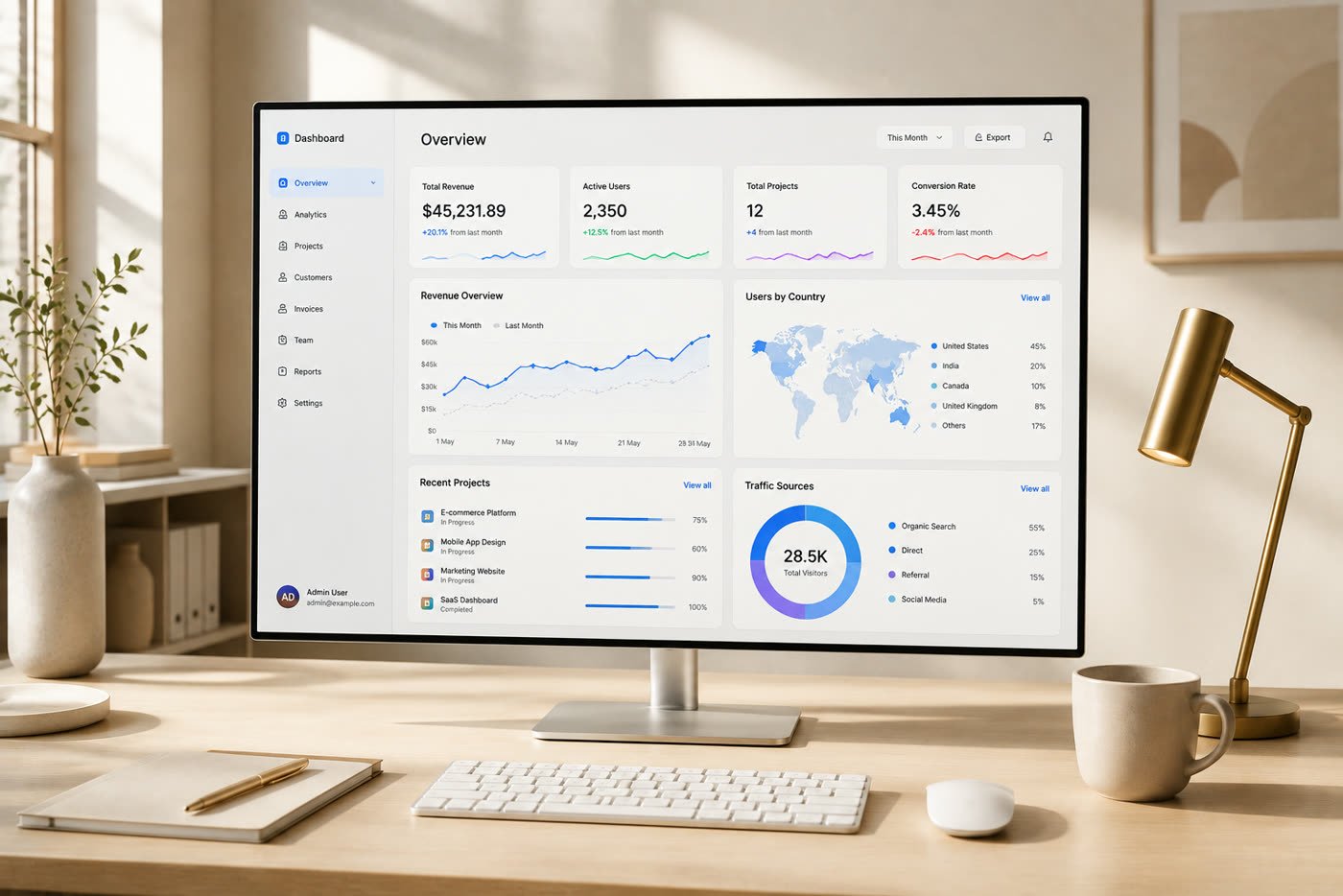
Illustrative SaaS product interface study. A concept, not a client screenshot.

SaaS vs custom software

Build SaaS only when many will subscribe.

Custom software serves one organisation and is paid for once. SaaS serves many customers on subscription, which adds tenancy, billing and onboarding. The guided brief helps decide which you need.

Billing

Plans, trials and renewals that run themselves.

SaaS subscription billing integration handles trials, upgrades, failed payments and invoices. Razorpay suits customers in India; other gateways can be scoped for international plans.

Owner console

See every account from one place.

A super-admin area shows sign-ups, active plans, usage and support flags, so you can run the business side of the product without querying the database.

SaaS architecture

Multi-tenant SaaS development, decided on day one.

The first architectural choice in custom SaaS development is how tenants are separated: a shared database with a tenant key, a schema per tenant, or a database per tenant. Each carries different costs for hosting, backups and migrations, and the wrong choice is expensive to reverse.

Most early products are well served by a shared PostgreSQL or MySQL database with strict tenant scoping enforced in one layer of code. Larger business customers sometimes require isolated databases or custom domains. The scope records which model is used and how a tenant could be moved later.

  • Tenant isolation model in writing
  • Custom domains can be scoped
  • Per-tenant settings and branding
  • Migrations planned for growth

Kinds of SaaS

B2B, micro SaaS and white label products.

A B2B SaaS development company is usually asked for team accounts, invitations, roles and audit history. Micro SaaS development is narrower: one sharp feature, a simple plan and very low running costs, often for a founder testing demand alongside other work, where hosting bills must stay small.

White label SaaS development lets agencies resell the product under their own logo and domain. A fourth route is to convert software to SaaS: an internal tool or desktop system already proven in one company is rebuilt with sign-up, tenancy and billing so that others can subscribe.

  • Team accounts and invitations
  • Lean micro SaaS builds
  • Reseller and white label modes
  • Internal tools turned into products

SaaS development process

Release a paying version first, then widen it.

The SaaS development process starts with a guided brief and a written scope for a first release: sign-up, one core workflow, one or two plans and the owner console. SaaS MVP development keeps that release small enough to reach real customers and produce honest feedback.

Every SaaS build is quoted individually with a fixed USD price, shown in your currency; larger scopes can be paid 50% up front and 50% on delivery. If the product already exists and needs clearer onboarding or billing screens, the fixed complex redesign package at USD 500 is the usual starting point.

  • First release scoped tightly
  • Fixed USD quote per phase
  • Later phases quoted separately
  • Code handover after final payment

What is covered

What a SaaS platform development scope can include.

A subscription product is more than its main feature. These six parts are scoped in writing, and any of them can wait for a later phase.

  1. Sign-up and onboarding

    Self-service registration, email or OTP verification, workspace creation and a first-run checklist that leads a new customer to value quickly.

  2. Tenancy and roles

    Isolated tenant data, team invitations, owner, admin and member roles, and per-tenant settings such as branding, time zone and currency.

  3. Plans and billing

    Free trials, monthly and annual plans, upgrades, proration rules, failed-payment handling and downloadable invoices through the agreed payment gateway.

  4. Core product screens

    The workflows customers pay for, designed as one consistent interface with empty states, validation and help text written for first-time users.

  5. Owner console and analytics

    A super-admin view of accounts, plans, revenue and usage, with the ability to suspend, extend or assist any tenant when needed.

  6. Marketing site and docs

    A public website with pricing and sign-up, plus a simple help centre, so the product can be found, understood and bought.

Fixed packages

The closest fixed packages, while your SaaS is quoted.

Prices are fixed in USD and shown in your own currency. The written quote confirms scope, delivery target and payment schedule before you pay.

redesign

E-commerce / SaaS / CRM Redesign

Redesign a complex ecommerce, SaaS, or CRM website around its customer journeys, system states, data, and revenue-critical flows.

Loading live price

Loading delivery estimate

View package details

website

Ultra / E-commerce

An ecommerce website with catalogue, cart, payment-ready checkout, coupons, and order emails. Custom CRM can be scoped.

Loading live price

Loading delivery estimate

View package details

Choose a package or describe the idea

Pick the closest fixed package, or answer a short guided brief. Anything you are unsure of can be left for Ranjeet to decide.

Approve a written scope and a fixed price

The server-created quote states inclusions, additions, delivery target, currency and payment schedule before anything is charged.

Track the build and receive the handover

Milestones, files, feedback and approvals stay in your private client portal until source code and assets are handed over.

Questions buyers ask

SaaS development: questions answered before you pay.

There is no fixed package for a new SaaS product, because tenancy, billing and features vary widely. After a guided brief you receive a written scope with a fixed USD price, shown in your currency. Building in phases keeps the first payment proportionate to a first release.

A clear next step

Turn the idea into a written scope and a fixed price.

CodingMarble is India-based and works remotely with clients worldwide. No call is required: the guided brief, quote, payment, build tracking and handover all live in one private client portal.